
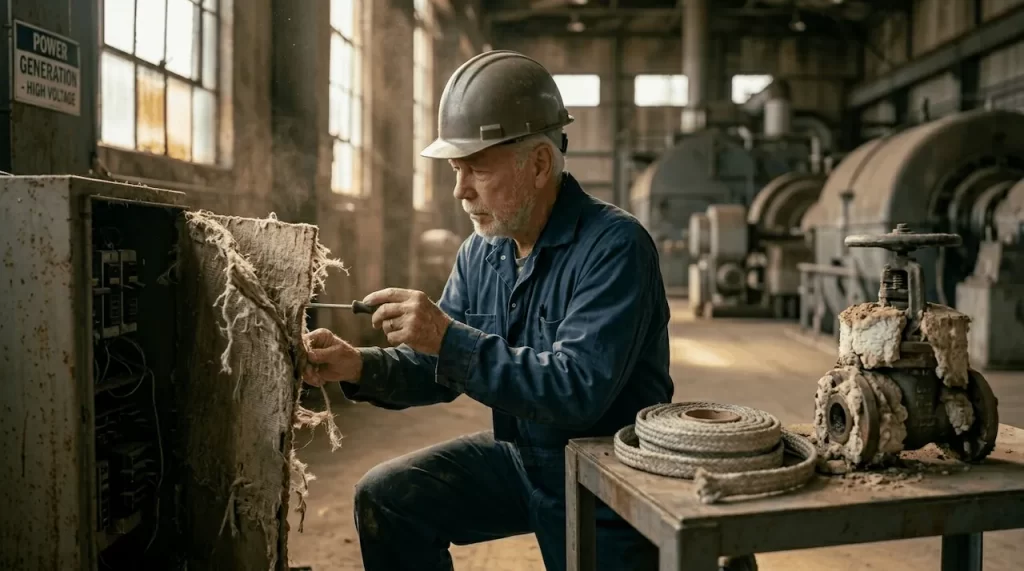
In 2026, the industrial landscape has shifted toward renewable energy, but for those who spent decades maintaining our nation’s power grid, the legacy of past work remains. If you spent your career as an electrician or a boiler technician, you were likely part of a “high-risk” generation. At MesoCare, we understand that a cough or shortness of breath today often traces back to a specific valve or a roll of insulation handled forty years ago.
Navigating the healthcare system for asbestos-related conditions requires more than just medical care; it requires an advocate who understands the industrial history of your trade. By learning about the different types of asbestos exposure, you can better equip your medical team with the history they need to provide an accurate diagnosis. For a deeper look at how asbestos harms the body, see our overview of asbestos exposure health risks.
The Hidden Asbestos in Power Plants: A Guide for Electricians and Boilers
For decades, power plants were the architectural backbone of American industry. Because these facilities generated immense heat and carried high-voltage electricity, asbestos was the primary choice for fireproofing and insulation. It was used in everything from the mortar between the bricks of a massive boiler to the felted paper lining an electrical panel.
Understanding Power Plant Asbestos Exposure Risks
The risk within a power station was not limited to those who manufactured the raw minerals. Instead, power plant asbestos exposure occurred most frequently during routine maintenance and emergency repairs. When a turbine needed to be serviced or a pipe began to leak, the protective insulation had to be stripped away. This process, often involving saws, scrapers, and wire brushes, released millions of microscopic fibers into the stagnant air of the plant.
You are not alone. Our team is here to help you navigate the paperwork so you can focus on healing.
Why Boilers and Turbines Were Ground Zero
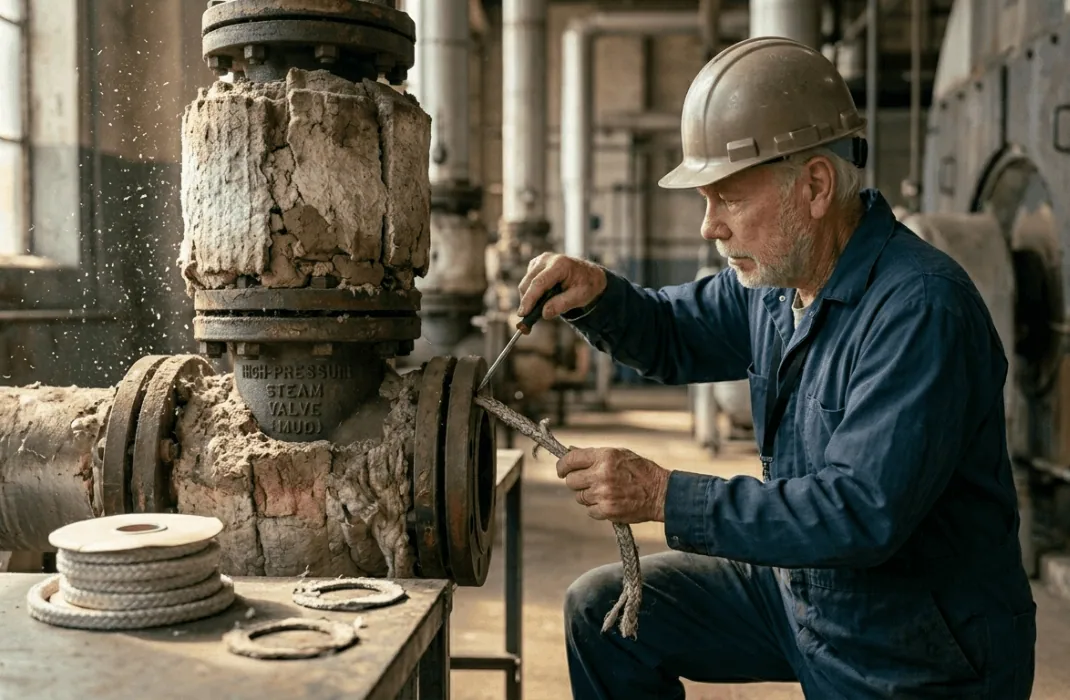
Boilers were effectively “wrapped” in asbestos to contain the heat required to create steam. Over time, this insulation would become brittle and “friable,” meaning it could easily crumble into a fine dust. Boiler technicians often had to crawl inside these units for inspections, placing them in direct contact with degraded asbestos block, refractory cement, and “mud” used to seal joints. Similarly, turbines were encased in asbestos blankets that, when moved, created a visible cloud of toxic dust.
The Specific Danger of Asbestos in Gaskets and Valves
One of the most overlooked sources of exposure for utility workers was the constant maintenance of high-pressure steam systems. Asbestos in gaskets and valves was essential for creating airtight seals that could withstand extreme temperatures.
The Maintenance Loop: Removing Old Seals
When a valve failed, an electrician or pipefitter had to remove the old, hardened gasket. This usually required a gasket scraper or a power sander to clean the metal flange before a new seal could be installed. This activity generated a concentrated stream of dust right in the worker’s breathing zone. Unlike a large sheet of insulation, a small gasket seemed harmless, yet it contained up to 80% chrysotile asbestos.
Packing and Steam Seals
In addition to gaskets, valves used “packing,” a braided rope-like material infused with asbestos, to prevent leaks around the stem. Replacing this packing involved digging out the old, dried material with a metal pick. This process turned the fibrous rope into airborne particulates that could linger in the work area for hours.
Assessing the Electrician Mesothelioma Risk
While we often associate asbestos with “dusty” trades like insulation, the electrician mesothelioma risk is remarkably high due to the unique way the mineral was integrated into electrical components. Electricians in power plants frequently handled materials that were designed to prevent electrical arcing and fires.
Asbestos in Electrical Components
If you worked as an industrial electrician before the 1990s, you likely handled:
- Arc Chutes: Used in large circuit breakers to extinguish electrical arcs; these were often made of asbestos-reinforced plastic.
- Electrical Wire Insulation: Many high-heat wires were wrapped in felted asbestos paper or braided asbestos sleeves.
- Panel Linings: The interior of switchgear boxes and breaker panels were often lined with asbestos millboard to provide a fire barrier.
Whenever an electrician pulled new wire through an old conduit or serviced a large breaker, they risked disturbing these hidden fibers. Because this work was often performed in cramped, poorly ventilated electrical vaults, the concentration of fibers was significantly higher than in open-air environments.
Modern Utility Worker Asbestos Health Monitoring
In 2026, the medical community has recognized that waiting for symptoms to appear is not enough for high-risk trades. Utility worker asbestos health monitoring has evolved to include proactive, low-dose screenings. If you have a history of working in power generation, standard physicals may not be enough to catch the early signs of pleural thickening or small effusions.
“Asbestos fibers can be brought into the home on the shoes, clothing, hair, and skin of workers. This ‘take-home’ exposure can put other family members at risk. Studies have shown that families of asbestos workers have an increased risk of developing mesothelioma and other asbestos-related diseases.”
Source: National Institute of Environmental Health Sciences (NIEHS)
High-Resolution Diagnostic Toolkits
Modern monitoring for power plant veterans often includes:
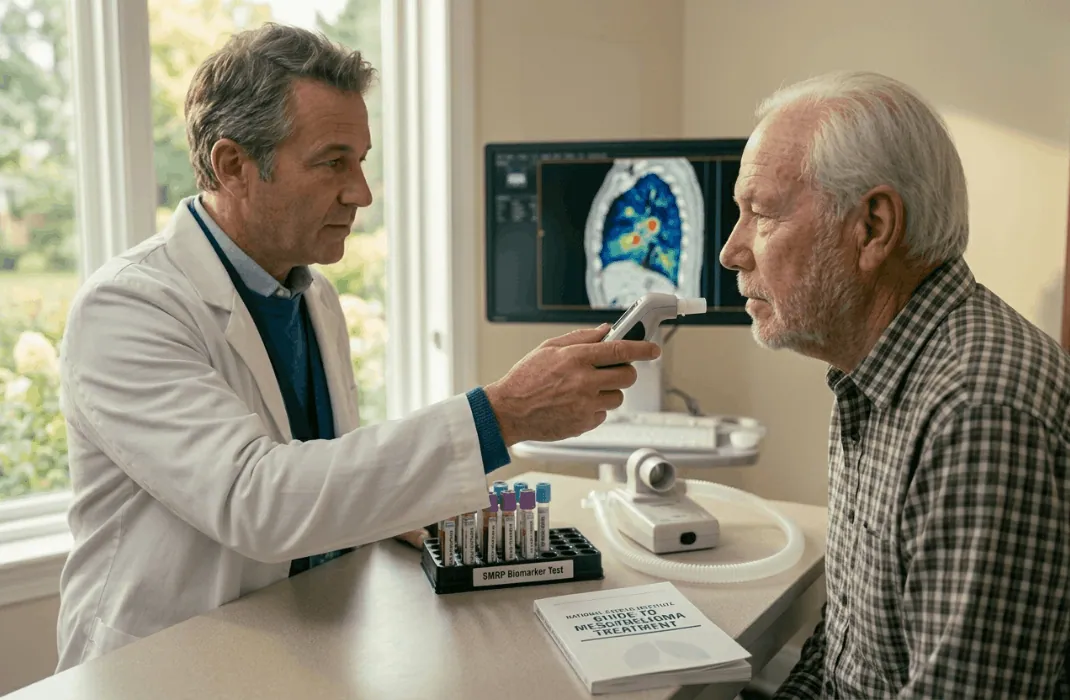
- Low-Dose CT (LDCT) Scans: Offering a 3D view of the lungs to spot nodules that a standard X-ray would miss.
- SMRP Biomarker Tests: A blood test that monitors protein levels associated with mesothelial cell changes.
- Pulmonary Function Tests (PFTs): Tracking the functional capacity of the lungs over time to identify early respiratory decline.
For those who are navigating these medical hurdles, The National Cancer Institute provides comprehensive guides on current treatment standards and clinical trial eligibility.
Advocacy for Workers
Many electricians and boiler operators pride themselves on their resilience. However, seeking specialized medical monitoring is not about “looking for trouble,” it is about protecting your future and your family. If you are experiencing persistent chest heaviness or a dry cough, it is vital to lead with your occupational history when speaking to a doctor.
As a nurse navigator, I often tell my patients: “You earned these health benefits through your years of service in the plants.” Accessing financial aid is a critical part of that journey. Whether it is applying for a grant to cover travel to a specialist or filing a claim with an asbestos trust fund, these resources exist because companies failed to protect you decades ago.
Paying for care: Several paths can help cover mesothelioma treatment, travel, and lost income — trust funds, VA benefits, Medicare/Medicaid, and named grants. Our financial-help overview walks through each one in plain language, with the named programs and how to apply.
At MesoCare, we are here to help you reconstruct your work timeline and connect you with the specialists who understand the power plant signature of asbestos disease. You handled the nation’s power for decades; now, let us help you handle your health with the same dedication.
Industrial Health Fact: Peer-reviewed mortality studies indicate that utility workers and power plant maintainers face a significantly elevated risk of asbestos-related malignancy. Research tracking long-term health outcomes shows that individuals in high-heat industrial trades often incurred over 20 years of cumulative exposure before modern safety protocols were established.
Source: International Journal of Occupational and Environmental Health / National Library of Medicine
If you’re caring for a family member who worked in a power plant, see our caregiver guide for power plant workers and their families — written for spouses, adult children, and other family members navigating a mesothelioma diagnosis.
Medical Disclaimer: MesoCare.org provides educational information and is not a medical provider. We are not doctors. This content is not intended to be a substitute for professional medical advice, diagnosis, or treatment. Always seek the advice of your physician with any questions regarding a medical condition. Treatments mentioned are options that may help and should be discussed with a specialist.
Legal Disclaimer: MesoCare.org is a resource center and advocacy group, not a law firm. We do not provide legal advice or guarantee specific financial outcomes. No attorney-client relationship is formed by using this site or contacting an advocate. Potential compensation or grant amounts are estimates and vary by individual case.