
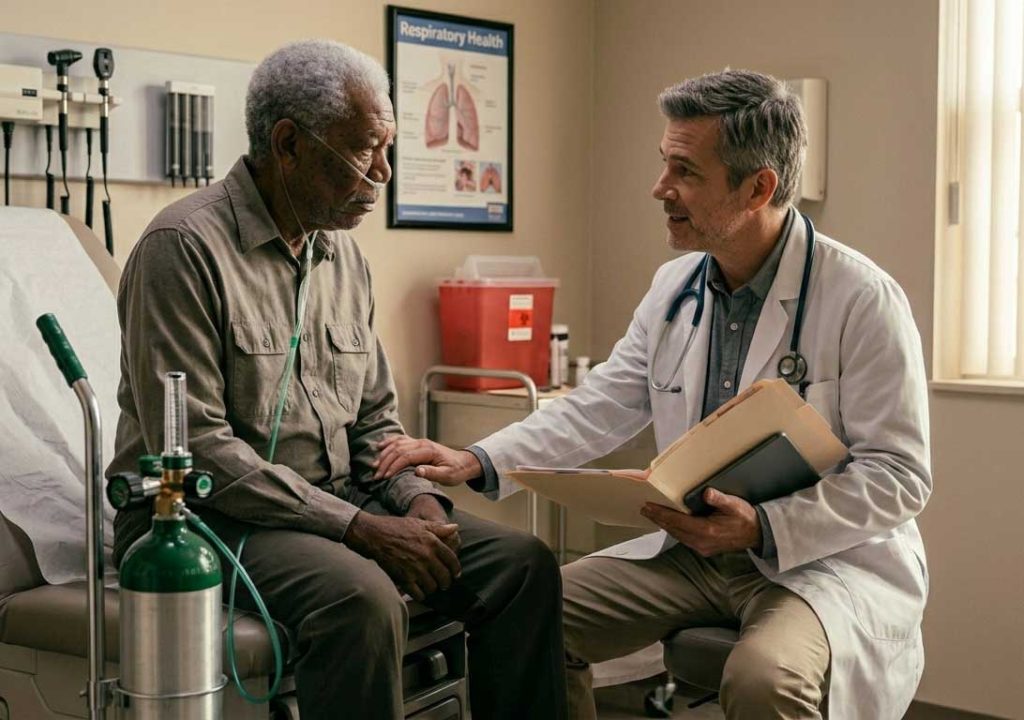
What is Mesothelioma?
Written for patients and families
Mesothelioma is a rare, aggressive cancer most often linked to asbestos exposure.
We combine plain‑language explanations with practical steps—so you can move faster from uncertainty to a plan.
- Types of mesothelioma and how they differ
- Common symptoms and diagnostic steps
- Staging and prognosis considerations
- Questions to ask your care team
- How specialists coordinate care

Don't Deal With Mesothelioma Alone
What Causes Mesothelioma?
What starts a disease that can take decades to show up? For mesothelioma, the answer is clear. This cancer grows in the thin lining of the lungs or abdomen, and asbestos is the main known cause. Exposure adds up over time. Risk depends on how much, how long, and how often someone was around asbestos. Symptoms can take 20 to 50 years to appear.
Our comprehensive page explains how asbestos triggers mesothelioma in the body, who faces higher risk, other less common risk factors, and practical steps you can take to protect yourself and your family. The goal is clarity and calm facts you can use. The core idea is simple: asbestos and mesothelioma risk.
What Are The Signs of Mesothelioma?
New chest pain or stubborn shortness of breath can be unnerving. When there is a history of asbestos exposure, these symptoms raise a different level of concern. Mesothelioma is a cancer of the lining of the lungs (pleura) or abdomen (peritoneum), and rarely the lining around the heart (pericardium).
Asbestos is the main known cause. Imaging looks for clues, fluid tests assess what is present, and tissue sampling confirms the answer. A biopsy confirms the diagnosis. Timelines vary by person and clinic, but acting early can improve options.
What Type of Support Is Available?
A mesothelioma diagnosis affects more than just physical health. We’ve compiled a list of practical and emotional support resources available to patients, caregivers, and families throughout treatment and beyond.
What Are My Legal Options?
Many individuals with mesothelioma were exposed to asbestos through work or service environments. Learn more about general information on legal options and compensation resources that some people choose to explore as part of their planning process.
10 questions to ask your doctor this week
The first oncology visit after a mesothelioma diagnosis is a lot to absorb. Walking in with a written list of questions makes a real difference. Here are ten prioritized questions, written for someone new to the diagnosis.
- What type of mesothelioma do I have (pleural, peritoneal, pericardial) and what cell type (epithelioid, sarcomatoid, biphasic)?
- What stage is my cancer, and what does that mean for treatment options?
- Should I get a second opinion at a mesothelioma specialty center, and which would you recommend?
- What are my realistic treatment goals — cure, life extension, symptom management, or a combination?
- What are all the treatment options you’re considering (surgery, chemotherapy, radiation, immunotherapy, clinical trials)?
- Should I have biomarker or genetic testing that might change my treatment options?
- What clinical trials might be available for someone with my diagnosis?
- What side effects should I expect, and how will we manage them?
- Who on my care team can I call between appointments, and for what kinds of questions?
- How often will we reassess, and what scans or tests will we use?
Write these down. Bring them to every appointment. Even if your doctor covers most of them without prompting, you’ll know you covered the ground. For more on what to expect in the weeks after diagnosis, see our Treatment page. The American Cancer Society also publishes a general questions-to-ask guide that’s worth reviewing.
Understanding your diagnosis: location, cell type, and stage
Your mesothelioma diagnosis is actually several pieces of information, each of which shapes the treatment conversation. Here’s what those terms mean in plain language.
Location — where the cancer started
- Pleural — in the lining around the lungs. The most common form, about 75% of cases.
- Peritoneal — in the lining around the abdomen. Most of the remaining cases.
- Pericardial — in the lining around the heart. Rare.
Cell type — how the cancer cells look under a microscope
- Epithelioid — the most common type and generally the most responsive to treatment.
- Sarcomatoid — less common, generally more aggressive, with fewer standard treatment options.
- Biphasic — a mix of both cell types; outcomes depend on the ratio.
Stage — how far the cancer has spread
Doctors use a staging system (I through IV for pleural mesothelioma) based on tumor size, lymph node involvement, and whether the cancer has spread beyond the original site. Stage influences whether surgery is an option, which drugs make sense, and what the typical course looks like. Ask your doctor to explain your specific staging and cell type. Those two pieces determine much of what follows.
The NCI Mesothelioma Treatment (Patient PDQ) has detailed information on staging systems and how they affect treatment planning. For the next step, see our Treatment page.
How mesothelioma is actually diagnosed
Most mesothelioma diagnoses take several steps. Understanding the process helps you know where you are and what’s next.
- Imaging. Usually a chest X-ray first, followed by a CT scan. A PET/CT may follow to look for spread. An MRI can add detail about chest-wall or diaphragm involvement.
- Fluid analysis. If there’s fluid around the lungs (pleural effusion), your doctor may draw a sample (thoracentesis) and send it to the lab. Fluid alone usually cannot confirm mesothelioma, but can help rule out other causes.
- Biopsy. A tissue sample is the only way to confirm mesothelioma. This is usually done through VATS (video-assisted thoracoscopic surgery) or a needle biopsy. The sample goes to pathology.
- Pathology review. A specialist pathologist examines the tissue and runs immunohistochemical stains to identify the specific cell type. This is where your epithelioid, sarcomatoid, or biphasic designation comes from.
- Staging. Once the diagnosis is confirmed, additional imaging and sometimes further biopsies determine the extent of disease and assign a stage.
If your diagnosis came quickly through only some of these steps, or if the cell type is unclear, ask for a second opinion — ideally from a mesothelioma specialty center. Mesothelioma is rare and initial misdiagnosis is common. A second pathology review is routine and often valuable. The NCI maintains a directory of NCI-designated cancer centers, many of which have dedicated mesothelioma programs.
Red flags vs. worries that can wait
Between appointments, every new symptom can feel like an emergency. Here’s how to think about which are urgent and which can wait for the next scheduled visit.
Call your care team today (or go to the ER):
- Sudden or severe chest pain or pressure, especially with sweating, nausea, or left-arm pain (treat as possible cardiac emergency — go to the ER)
- New or worsening shortness of breath, especially at rest
- Fever above 100.4°F, chills, or signs of infection
- Coughing up blood
- Severe new headache, vision changes, or confusion
- Swelling, warmth, or pain in one leg (possible blood clot)
- Sudden severe belly pain, persistent vomiting, or inability to keep fluids down
Bring up at the next scheduled visit:
- Gradual fatigue changes
- Mild appetite changes
- Bowel or bladder pattern changes (if gradual)
- Sleep trouble
- Mood or anxiety changes
- Mild, slowly worsening cough
Keep a simple daily symptom journal: date, what you noticed, how bad it was on a 0-10 scale. Patterns matter more than individual bad days. For mental health support, see our Support page, which includes information on crisis resources. If you’re in the United States and having thoughts of self-harm, call or text 988 for free, confidential crisis support.
Sources & editorial approach
This page compiles plain-language summaries from federal health agencies, peer-reviewed medical sources, and established cancer centers. We update content as new guidance and research emerges. MesoCare.org does not provide medical diagnosis or treatment — for personal care decisions, speak with your clinical team.
Primary sources
- NCI — Malignant Mesothelioma Treatment (Patient PDQ) — cancer.gov/types/mesothelioma/patient
- American Cancer Society — Mesothelioma — cancer.org — Malignant Mesothelioma
- Mayo Clinic — Mesothelioma overview — mayoclinic.org — Mesothelioma
- National Organization for Rare Disorders (NORD) — rarediseases.org
- National Library of Medicine / PubMed Central reviews — pubmed.ncbi.nlm.nih.gov
Sponsorship & transparency
MesoCare.org is sponsored by Danziger & De Llano, LLP, a law firm that represents individuals affected by asbestos exposure and mesothelioma. Content on this site is informational only and is not medical or legal advice. See our Disclaimer, Sponsorship, and Privacy Policy for details on how submitted information is handled and how this site is funded.