
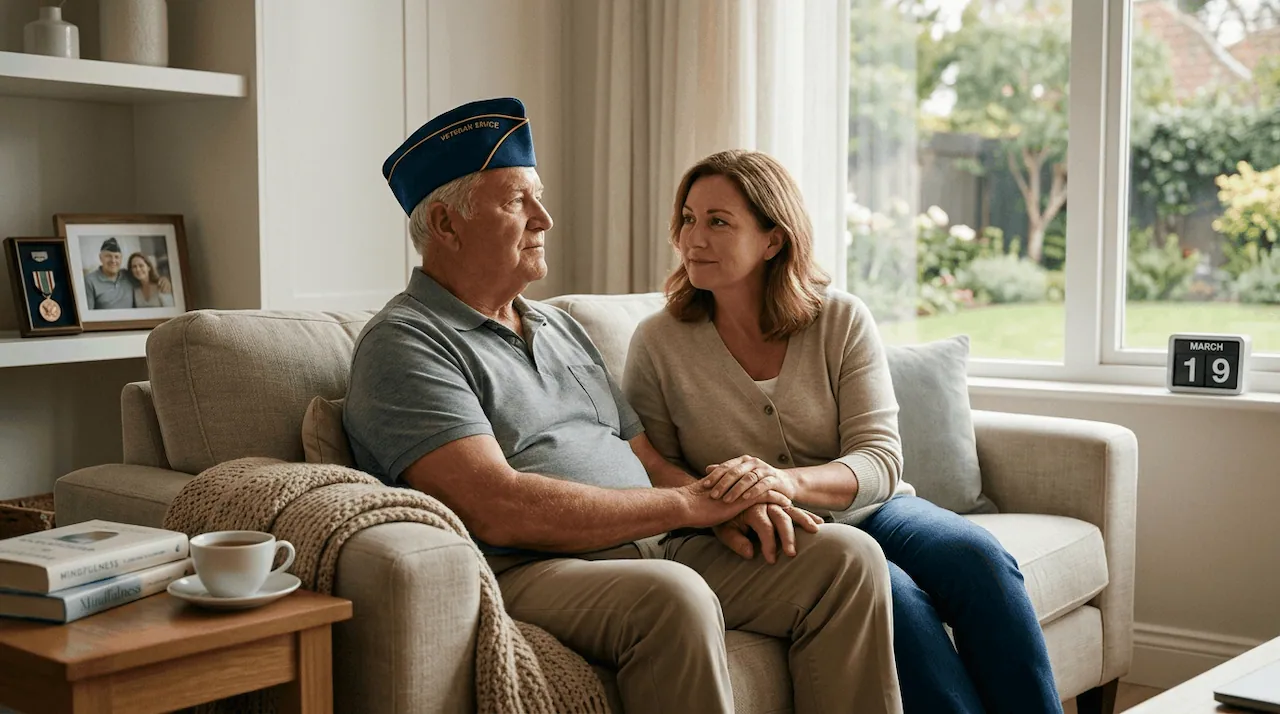
The week before a CT scan is often the hardest week of the month. For many families navigating life after a diagnosis, time begins to move in three month increments. As the appointment date approaches, you may find that sleep becomes elusive, tempers grow short, and the “what-ifs” start to play on a loop in your mind. This specific type of distress, commonly known as “mesothelioma scan-xiety,” is a heavy burden for both the patient and the caregiver to carry.
At MesoCare, we view mental health as a vital part of your physical battle. We call this “Emotional Armor.” Just as you prepare for chemotherapy or surgery, you must also prepare your mind for the emotional toll of regular monitoring. Understanding the diagnostic steps for mesothelioma and subsequent monitoring is just the first part of the journey; the next is learning how to protect your peace of mind while waiting for the next set of results.
Understanding Scan-Xiety and Why it Impacts Mesothelioma Families
Scan-xiety is not just a simple case of nerves. It is a physiological response to a perceived threat. When you or your loved one enters that imaging suite, it can feel as though your entire future is being decided by a single black and white image. This stress often manifests as physical symptoms, including chest tightness, digestive issues, and increased fatigue. For veterans who are accustomed to maintaining a “stoic” exterior, this internal pressure can feel particularly isolating.
The wait for medical news can be overwhelming, but our advocates are here to help you find the financial and emotional support you need to stay strong.
Paying for care: Several paths can help cover mesothelioma treatment, travel, and lost income — trust funds, VA benefits, Medicare/Medicaid, and named grants. Our financial-help overview walks through each one in plain language, with the named programs and how to apply.
The Psychological Weight on the Caregiver

As a caregiver, you often act as a shock absorber. You try to remain positive for your spouse or parent, but internally, you are managing the same fears. You might find yourself over-analyzing every new cough or change in their energy levels, wondering if it is a sign of disease progression. Recognizing that your anxiety is valid is the first step in managing it. You cannot pour from an empty cup, and your mental resilience is just as important to the household as the patient’s own strength.
Why Veterans Face Unique Challenges with Medical Monitoring
Many mesothelioma patients are veterans who spent their careers in high-stress, high-consequence environments. In the military, you are trained to identify a threat and take immediate action. The “waiting game” of cancer monitoring feels like an invisible enemy that you cannot fight with traditional tactics. This often leads to a sense of powerlessness. Reframing mindfulness and mental health as “tactical preparation” or “emotional armor” can help veterans engage with these tools more effectively.
Mindfulness Techniques and Emotional Armor for Veterans
Mindfulness does not have to involve sitting on a mat in total silence. For the Veteran, mindfulness is about situational awareness of one’s own thoughts. It is about recognizing when a “what-if” thought enters your mind and choosing not to let it take command of your day. Think of it as a mental checkpoint. When a negative thought appears, acknowledge it, and then intentionally redirect your focus to a physical sensation, like the weight of your feet on the floor or the rhythm of your breath.
Box Breathing for Immediate Stress Relief
One of the most effective tools for calming the nervous system is box breathing, a technique often used by elite tactical teams to maintain focus under pressure. Breathe in for four seconds, hold for four seconds, exhale for four seconds, and hold for four seconds. This simple cycle sends a clear signal to your brain that you are safe. It is a practical way to lower your heart rate while sitting in the waiting room or lying inside the imaging tube.
Grounding Exercises to Stop Spiraling Thoughts
When the “what-ifs” start to take over, use the 5-4-3-2-1 grounding method. Identify five things you can see, four things you can touch, three things you can hear, two things you can smell, and one thing you can taste. This forces your brain to move from the abstract “future fear” back into the concrete “present moment.” It is a way to reinforce your emotional armor when the psychological pressure starts to build.
“Anxiety is a normal and expected reaction to the many stresses of cancer. Feelings of fear, worry, and uncertainty are common when you are waiting for test results or facing a new treatment.”
The Power of Distraction Planning During the Pre-Scan Week
One of the best ways to combat scan-xiety is to stay busy with intentional activities. We recommend “Distraction Planning.” This means pre-scheduling activities for the days leading up to the appointment and the days spent waiting for results. Do not leave your schedule empty, or your mind will inevitably fill that space with worry. Fill your calendar with low-stress, engaging tasks that keep your hands and mind occupied.
Engaging in “Flow State” Activities
Activities that put you in a “flow state,” where you lose track of time, are the most effective distractions. For some, this might be woodworking, gardening, or working on a car. For others, it might be a complex puzzle or a favorite book. The goal is to choose something that requires just enough concentration to keep your thoughts from wandering toward medical data. If you are a caregiver, suggest an activity you can do together that has nothing to do with the diagnosis.
Planning the Post-Scan Reward
Make it a tradition to do something enjoyable immediately after the scan is complete. Whether it is visiting a favorite bakery, going to a movie, or taking a scenic drive, having something to look forward to changes the focus of the day. It shifts the narrative from “I am going to get a scan” to “I am going to get my favorite lunch after my appointment.” This small shift in focus can significantly lower the dread associated with the hospital visit.
How to Ask Your Doctor for Results Transparency
A major source of scan-xiety is the “information gap,” which is the time between the scan being performed and the doctor explaining the results. You have the right to be an active participant in your care plan. Understanding how and when you will receive news can help you feel more in control of the process. Discussing advanced cancer treatment and monitoring with your medical team can clarify what to expect during these intervals.
Setting Expectations for Communication
Before the scan, ask your oncology team three specific questions: “When will the results be available in the patient portal?” “Who will be the one to call us?” and “If we haven’t heard anything by a certain day, whom should we contact?” Having a clear timeline prevents you from jumping every time the phone rings. It also gives you permission to stop checking the online portal every ten minutes, as you know exactly when the data is expected.
Requesting a “Pre-Scan” Briefing
Ask your doctor to explain exactly what they are looking for in this specific scan. Are they looking for stability? Are they monitoring a specific area where a new symptom was reported? When you understand the goal of the scan, it becomes a piece of data rather than a judgment on your life. Knowledge is a key component of your emotional armor. It replaces the “unknown” with a clear clinical objective, making the process feel more like a technical checkup than a trial.
Financial Stability as a Pillar of Mental Resilience
For many families, scan-xiety is compounded by financial stress. Every three month checkup is a reminder of the ongoing costs of travel, co-pays, and time away from work. It is hard to focus on mindfulness when you are worried about how to pay for the next round of care. At MesoCare, we believe that removing financial barriers is a critical part of supporting your mental health and resilience.
The Role of Advocacy in Reducing Stress
Our patient advocates work with families to identify sources of compensation that can ease the burden. Whether it is navigating VA benefits for veterans or accessing Asbestos Trust Funds for industrial workers, securing these “earned benefits” provides a safety net. When the financial “what-ifs” are managed, you have more mental energy to focus on the emotional side of the battle. You are not asking for a handout; you are accessing funds that were specifically set aside to support families in your exact position.
Creating a Long-Term Roadmap

Resilience comes from having a plan. When you have a financial roadmap in place, the three month scans feel less like a cliff and more like a milestone on a well-marked path. This sense of security allows you to focus on what matters most: spending quality time with your family and maintaining your quality of life. We are here to help you build that roadmap, ensuring that your emotional armor is reinforced by financial stability.
Mental resilience is a practice, not a destination. Some days will be easier than others, and that is perfectly okay. By using mindfulness, distraction planning, and clear communication with your doctors, you can reclaim your week from scan-xiety. Remember that you are more than a patient or a caregiver; you are a person with a future, and we are here to help you navigate it.
For more resources on staying strong during your journey, visit MesoCare.
Supportive Care Statistic:
Research indicates that approximately 60% to 90% of cancer survivors experience some level of “scan-xiety” before follow up imaging, yet those who utilize proactive coping strategies like distraction planning report a 40% reduction in perceived distress. Source: National Center for Biotechnology Information (NCBI).
Medical Disclaimer: MesoCare.org provides educational information and is not a medical provider. We are not doctors. This content is not intended to be a substitute for professional medical advice, diagnosis, or treatment. Always seek the advice of your physician with any questions regarding a medical condition. Treatments mentioned are options that may help and should be discussed with a specialist.
Legal Disclaimer: MesoCare.org is a resource center and advocacy group, not a law firm. We do not provide legal advice or guarantee specific financial outcomes. No attorney-client relationship is formed by using this site or contacting an advocate. Potential compensation or grant amounts are estimates and vary by individual case.