
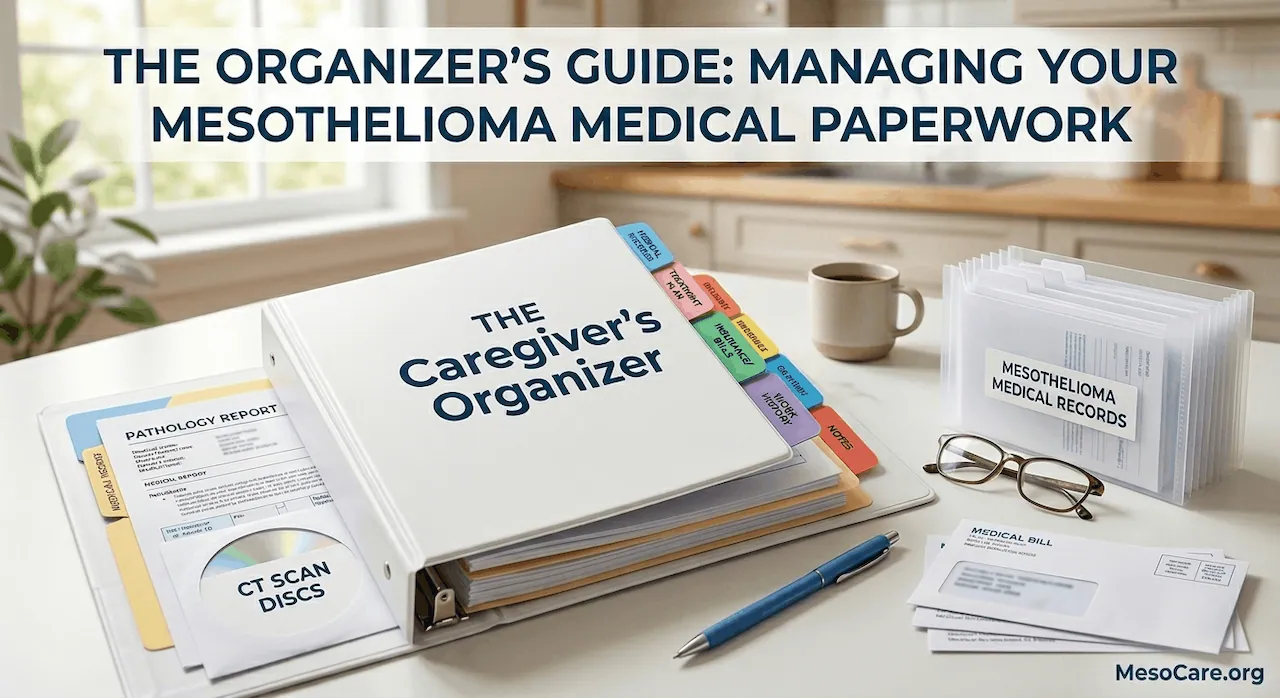
The kitchen table often tells the story of a mesothelioma diagnosis before the rest of the house catches up. What used to be a space for morning coffee and family dinners is now buried under a mountain of discharge summaries, insurance forms, and complex pathology reports. You are likely finding yourself in a new and exhausting role: part medical historian, part administrative assistant, and full-time caregiver. It is a weight no one is ever truly prepared to carry, but you do not have to carry it without a map.
MesoCare understands that your heart and energy should be focused on your loved one’s comfort, not on hunting for a missing CT scan disc. Organizing your mesothelioma medical records is a powerful way to reclaim a sense of order in a situation that feels anything but orderly. This guide provides a practical roadmap to help you streamline the process, ensuring you have everything ready for medical bill assistance and clinical consultations. By the time you finish reading, you will have a clear strategy to move from administrative chaos to clinical clarity.
Establishing Your Command Center for Mesothelioma Patient Support
Information acts as your most valuable tool when navigating a complex asbestos-related illness. Doctors at different hospitals frequently need to see the same scans, and patient advocate resources often require specific proof of diagnosis to unlock financial grants. If your records are disorganized, it can lead to unnecessary delays in treatment or missed opportunities for much-needed aid.
Creating a central “Command Center” for your paperwork ensures that any member of the care team—whether a spouse, an adult child, or a professional advocate, can step in and help at a moment’s notice. Having a clear system means no detail falls through the cracks during a transition of care. It also makes it much easier to track the hidden costs of care, such as travel expenses and co-pays, which are essential when applying for support through mesothelioma patient support services.
You are not alone in this journey. We can help you understand the types of financial aid available to help your family cover the costs of treatment and daily living.
Check My Eligibility for Financial Aid
Building Your Mesothelioma Diagnosis Checklist
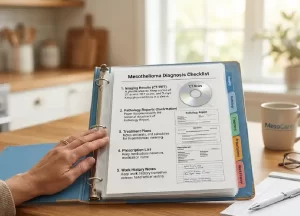
Start your organization journey with a physical three-ring binder or a secure digital folder. Most caregivers find a physical binder easiest to bring to appointments because you can hand it directly to a nurse or a billing specialist for quick reference. Here is what should go inside your mesothelioma diagnosis checklist:
- Imaging Results: Keep copies of CT scans, PET scans, and X-rays. Often, these are provided on a CD. Keep the physical discs in a sleeve in your binder.
- Pathology Reports: This is the document that confirms the cell type (pleural, peritoneal, etc.). It is the “gold standard” for checking eligibility for compensation.
- Treatment Plans: Notes from the oncologist regarding chemotherapy cycles, radiation schedules, or surgical options.
- Prescription List: A live document of all medications, dosages, and pharmacy contact information.
- Work History Notes: A simple list of where your loved one worked and when. This is vital for connecting their illness to asbestos exposure.
How to Access and Request Mesothelioma Medical Records
Patients have a legal right to their medical data, but hospitals do not always make it easy to access. To stay ahead of the curve, ask for a “hard copy” of every report before you leave the doctor’s office. If you are catching up on old records, you will likely need to sign a Release of Information (ROI) form at each facility where treatment occurred.
Modern cancer centers use digital portals like MyChart. While these are helpful, they often only show a summary of results. For financial assistance applications, you may need the full, dictated report from the doctor. A patient advocate can often help you navigate these requests if the hospital bureaucracy becomes too frustrating or slow.
Where to find a specialist: Most mesothelioma programs are at one of the 13 NCI-designated cancer centers that run a dedicated mesothelioma service. We list them with phone numbers in our caregiver guide to finding a mesothelioma specialist, including which centers do P/D versus EPP and how to ask for a second opinion.
“Patients have a right under the HIPAA Privacy Rule to access their protected health information. This includes the right to inspect and obtain a copy of their health records in the format they prefer.”
Navigating Insurance and Medical Bill Assistance
Financial aspects of a diagnosis are often the most stressful part for families. Insurance companies send “Explanation of Benefits” (EOB) forms that look like bills but are actually just summaries of what was covered. To keep your finances straight, create a separate tab in your binder labeled Medical Bill Assistance.
Inside this tab, keep a log of every phone call you have with insurance providers. Note the date, the name of the person you spoke with, and any reference numbers they give you. This trail of evidence is vital if a claim is ever denied or if you need to prove a financial “hardship” to qualify for mesothelioma grants. Being organized here can save thousands of dollars in potential billing errors.
Simplifying the Daily Logistics for Caregivers
Daily logistics can wear a caregiver down faster than the medical appointments themselves. Using a simple calendar to track appointments, blood draws, and symptoms can help your medical team make better decisions. If you notice your loved one is more tired on Tuesdays after a Monday treatment, that is a pattern your doctor needs to know. Documenting these shifts helps in organizing cancer paperwork that reflects the reality of the patient’s journey.
Families also find it helpful to keep a “Question Log.” Throughout the week, write down things you want to ask the oncologist. When you are in the exam room, it is easy to forget your concerns due to the stress of the moment. Having them written down ensures your voice is heard and that you are maximizing your time with the mesothelioma care team.
The Role of Pathology and Cell Type in Your Records
Your records must clearly state the specific type of mesothelioma. Whether it is epithelioid, sarcomatoid, or biphasic, this detail determines the entire treatment path. Doctors will refer to these reports constantly. If you move between a local hospital and a specialized cancer center, having these mesothelioma medical records ready will save days, or even weeks, of waiting for files to be transferred between systems.
Keep a section of your binder specifically for “Biopsies and Pathology.” This is often the first thing a patient advocate will ask for when looking into financial assistance for mesothelioma. These documents prove the link between the illness and the eligibility requirements for various trust funds and grants. Without these, applications for aid cannot move forward.
Managing Travel and Lodging Documentation
Mesothelioma treatment often requires traveling to see a specialist at a major university or research hospital. Many families do not realize that travel expenses, including mileage, airfare, and hotel stays, can often be reimbursed or covered by specific treatment grants. However, you must have the receipts organized and dated to qualify for these programs.
Create a dedicated envelope or folder for travel. Every time you fill up the gas tank for a trip to the hospital, put the receipt inside. If you have to stay overnight near a cancer center, keep the final folio from the hotel. This documentation is a key part of your mesothelioma roadmap. It turns out-of-pocket stress into a manageable record for future support applications, ensuring you get back every dollar you are entitled to.
Using Patient Advocate Resources to Your Advantage
Caregivers do not have to be experts in medicine or insurance to be successful. Patient advocate resources exist to bridge the gap between you and the healthcare system. These professionals can help you understand your options for clinical trials, find local support groups, and even help you track down old employment records for asbestos exposure documentation.
Professional guidance from the American Cancer Society suggests that having a clear system for tracking your out-of-pocket costs and medical history can significantly reduce the time spent on administrative tasks. This allows you to focus on recovery and comfort. This is especially important as the medical landscape changes with new updates and 2026 deadlines approaching for various aid programs.
Mental Health and the Paperwork Burden
Paperwork can feel cold and clinical, which often adds to the emotional weight of caregiving. If looking at the binder makes you feel anxious, try to set a specific “admin hour” each week to handle filing and phone calls. Outside of that hour, put the binder away and out of sight. This helps separate the “business” of cancer from the personal, precious time you spend with your loved one.
Some caregivers find that digital organization works better for their mental health. Apps that scan documents into PDFs can help you keep your organizing cancer paperwork tasks strictly on your phone or computer. Regardless of the method you choose, the goal is to make the information work for you, not the other way around. Clear records lead to clearer minds and more focused care.
Communication Logs: Why They Matter
Between surgeons, oncologists, nurses, and social workers, you will speak to dozens of people every month. It is impossible to remember every detail of every conversation. A communication log is a simple sheet of paper where you write down who you talked to, the date, and what the “next step” was. If a nurse says, “We will call you on Thursday with the results,” and they don’t call, your log gives you the confidence to call back and ask for that specific person by name.
Key Steps to Take This Week

Start small if you are currently looking at an overwhelming pile of papers. Do not try to organize a year’s worth of records in one afternoon. Follow these three simple steps to start your mesothelioma roadmap:
- Step 1: Buy a sturdy binder, a set of 5 tabs, and several clear plastic sleeves to protect important documents.
- Step 2: Gather every piece of paper from the last 30 days and put them in order by date, starting with the most recent on top.
- Step 3: Call your primary doctor’s office or log into your patient portal to ensure you have a copy of the most recent pathology report and the most recent imaging summary.
Remember that this paperwork is more than just “files.” It is the key to unlocking financial aid, better medical outcomes, and peace of mind for your entire family. You are doing an incredible job navigating a difficult path. At MesoCare, we are here to help you turn that mountain of paper into a clear path forward. Our advocates can help review your documents and point you toward the resources that fit your specific needs.
Source: National Institutes of Health (NIH)
For more information on how to navigate your journey, call us at 1-800-877-6000.
Medical Disclaimer: MesoCare.org provides educational information and is not a medical provider. We are not doctors. This content is not intended to be a substitute for professional medical advice, diagnosis, or treatment. Always seek the advice of your physician with any questions regarding a medical condition. Treatments mentioned are options that may help and should be discussed with a specialist.
Legal Disclaimer: MesoCare.org is a resource center and advocacy group, not a law firm. We do not provide legal advice or guarantee specific financial outcomes. No attorney-client relationship is formed by using this site or contacting an advocate. Potential compensation or grant amounts are estimates and vary by individual case.