

Watching a loved one struggle with persistent breathlessness or chest pain is an heavy burden for any caregiver to carry. When you are in the early stages of seeking answers, the sheer volume of information can feel overwhelming. You may have heard mentions of the mesothelioma latency period, which explains why symptoms are only appearing now, decades after the initial asbestos exposure occurred. Understanding this timeline is not just about medical history; it is about securing the future. As we approach a new year, the urgency to move from “watching and waiting” to a confirmed medical profile has never been higher.
At MesoCare, we view ourselves as your personal navigator through this complex landscape. We understand that you aren’t looking for a legal battle; you are looking for a way to ensure your family member receives the highest quality of life possible. By accelerating the diagnostic process today, you are effectively opening doors to specialized support systems that have strict windows for entry. This guide is designed to help you understand why 2026 represents a critical juncture for families affected by asbestos-related conditions.
The Benefits of an Early Mesothelioma Diagnosis for Patient Care
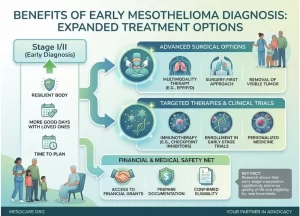
One of the most significant early mesothelioma diagnosis benefits is the expanded range of treatment options available to the patient. When a diagnosis is captured in its earliest stages, the body is often more resilient and capable of undergoing advanced therapies that might not be an option later on. For the anxious caregiver, this means more time and more “good days” with your loved one. Delaying a specialist consultation can unintentionally limit the medical “tools” doctors have at their disposal.
Beyond the physical treatments, a confirmed diagnosis is the primary key to understanding your mesothelioma diagnosis and how it impacts your eligibility for specific assistance programs. Many families wait until symptoms become severe before seeking a specialist, but by then, the administrative clock has already been ticking. Early confirmation allows you to process the emotional impact while simultaneously putting a financial and medical safety net in place.
Taking the first step toward a definitive answer can feel like a daunting leap, but you have already shown incredible strength by advocating for your loved one’s health; let us help you secure the resources they deserve.
Check My Eligibility for Financial Aid
How the Mesothelioma Latency Period Impacts Your 2026 Strategy
The mesothelioma latency period is famously long, often stretching between 20 and 50 years. This gap between exposure and illness often leads to a false sense of security. However, once symptoms like pleural effusion or localized pain begin to manifest, the window for certain administrative and medical actions begins to close. In the context of 2026, many programs are updating their criteria, making it essential to have your documentation finalized sooner rather than later.
For caregivers, this means looking back at work histories or home renovation projects from decades ago. While it feels like ancient history, these details are the foundation of your current eligibility. Identifying the source of exposure now, even while the diagnosis is still being refined, ensures that you are ready to act the moment the medical team provides a final report. This proactive stance is what separates a stressed caregiver from a prepared one.
Meeting 2026 Asbestos Claim Deadlines and Funding Requirements
As we look toward the upcoming year, it is vital to recognize that the landscape of support is constantly shifting. The 2026 asbestos claim deadlines are not just arbitrary dates on a calendar; they represent the final opportunities to access specific trust funds that were established to assist families exactly like yours. These funds often have “statutes of limitations” that begin the moment a symptom is documented or a diagnosis is rendered.
By securing a diagnosis now, you ensure that you are at the front of the line for eligibility for mesothelioma grants. These grants can cover everything from travel expenses to world-class cancer centers to basic home health care needs. For an anxious caregiver, knowing that these costs are covered can alleviate a massive amount of “middle of the night” worry. Waiting until later in 2026 could mean facing a backlog of applicants or missing a filing window entirely.
Where to find a specialist: Most mesothelioma programs are at one of the 13 NCI-designated cancer centers that run a dedicated mesothelioma service. We list them with phone numbers in our caregiver guide to finding a mesothelioma specialist, including which centers do P/D versus EPP and how to ask for a second opinion.
“The diagnosis of mesothelioma is often delayed because symptoms are non-specific and mimic more common conditions. Early intervention and specialized pathology are critical for improving patient outcomes and accessing support systems.”
Securing Financial Assistance Through Mesothelioma Grants
Many caregivers are unaware that there is a distinction between legal compensation and private grants. Grants are often available through non-profit organizations and specialized foundations to help with the immediate, out-of-pocket costs of care. The eligibility for mesothelioma grants often depends on the specific cell type and stage of the disease, both of which require a detailed biopsy and pathology report.
Securing this medical evidence now allows you to apply for multiple layers of support simultaneously. Whether it is a grant for a specialized nutritional program or a travel fund to visit a thoracic specialist in another state, these resources are finite. Acting before the 2026 rush ensures that your family’s application is reviewed while funds are still robustly available.
Understanding the Clinical Trial Enrollment Window for New Therapies
We are currently in a golden age of medical research regarding asbestos-related diseases. However, the clinical trial enrollment window for the most promising new therapies is often quite narrow. Researchers frequently look for patients who have recently been diagnosed and have not yet started heavy rounds of traditional chemotherapy. If you wait too long to confirm the diagnosis, your loved one may no longer meet the strict “inclusion criteria” for these cutting-edge trials.
Clinical trials offer access to medications and immunotherapies that may not be available to the general public for several years. For many, these trials represent the best chance at long-term survival. By prioritizing a swift diagnostic process, you are giving your loved one the gift of choice. You can find comprehensive information on the latest research and safety protocols through the National Institutes of Health, which tracks active trials globally.
Why 2026 Is a Landmark Year for Immunotherapy Research
The medical community has projected 2026 to be a significant year for the release of data from several major immunotherapy studies. Being “in the system” with a confirmed diagnosis allows your medical team to pivot quickly if a new treatment is fast-tracked by the FDA. When you have a diagnosis in hand, you move from being a passive observer to an active participant in the latest medical advancements. This is a core component of early mesothelioma diagnosis benefits that extends far beyond standard hospital care.
For caregivers, this means staying in close contact with a patient advocate who can monitor these trial openings for you. You don’t have to be a medical expert to navigate this; you just need to have the diagnostic paperwork ready to go. The clinical trial enrollment window waits for no one, and having your “medical passport” ready is the best way to ensure you don’t miss a breakthrough.
Taking Action: Your Checklist for the Remaining Months of 2025
As the year progresses, your focus should be on gathering the three pillars of support: medical evidence, work history, and advocate partnership. This proactive approach turns your anxiety into action. Start by requesting a referral to a pulmonologist who specializes in asbestos-related lung diseases. Standard oncologists are excellent, but mesothelioma requires a level of specialization that only a dedicated expert can provide.
Next, begin a simple log of symptoms and potential exposure sites. This doesn’t need to be a formal document yet; a simple notebook will do. This log will be invaluable when establishing eligibility for mesothelioma grants and meeting 2026 asbestos claim deadlines.
Partnering with a Patient Advocate for a Seamless Transition
You do not have to do this alone. A patient advocate can help you synthesize all this information, from the mesothelioma latency period concerns to the final grant applications. Their role is to handle the heavy lifting of coordination so you can focus on being a supportive caregiver. They can identify the specific clinical trial enrollment window that fits your loved one’s specific medical profile and ensure that no deadline in 2026 passes you by.
In the trades, we often say that a project is only as good as its foundation. In the journey of caregiving, a swift and accurate diagnosis is that foundation. It supports everything that comes after, from medical treatment to financial security and peace of mind. By acting now, you are ensuring that your loved one has the best possible “blueprint” for the years ahead.
Summary of Why Diagnostic Timing Matters for 2026
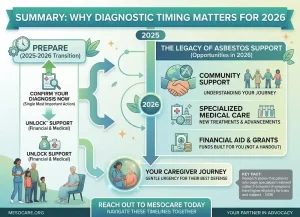
The transition into 2026 will bring new opportunities for support, but only for those who are prepared to meet them. Confirming a diagnosis today is the single most important action you can take to unlock financial aid, specialized medical care, and the support of a community that understands exactly what you are going through. Remember, these resources are not a handout; they are a support system built specifically for those who have been affected by the legacy of asbestos.
Your journey as a caregiver is one of the most important roles you will ever take on. By staying informed and moving forward with a sense of gentle urgency, you are providing your loved one with the best possible defense against the challenges of this disease. Reach out to Mesocare today to see how we can help you navigate these timelines together.
Source: National Center for Biotechnology Information (NCBI)
Medical Disclaimer: MesoCare.org provides educational information and is not a medical provider. We are not doctors. This content is not intended to be a substitute for professional medical advice, diagnosis, or treatment. Always seek the advice of your physician with any questions regarding a medical condition. Treatments mentioned are options that may help and should be discussed with a specialist.
Legal Disclaimer: MesoCare.org is a resource center and advocacy group, not a law firm. We do not provide legal advice or guarantee specific financial outcomes. No attorney-client relationship is formed by using this site or contacting an advocate. Potential compensation or grant amounts are estimates and vary by individual case.