

Discovering that you or a loved one has been exposed to asbestos is a moment defined by a sudden shift from normalcy to deep concern. Whether the exposure happened decades ago in an industrial workplace or more recently during a home renovation, the weight of that realization can be overwhelming. As a family protector, your immediate instinct is to find clarity and take decisive action to mitigate risks. While you cannot change the past, you can control the next steps by transforming your concern into a structured plan for medical monitoring and financial security. By understanding how to handle asbestos exposure, you move from a state of uncertainty to one of proactive advocacy, ensuring that your family’s health and future remain the highest priority through careful planning and informed decision making.
Paying for care: Several paths can help cover mesothelioma treatment, travel, and lost income — trust funds, VA benefits, Medicare/Medicaid, and named grants. Our financial-help overview walks through each one in plain language, with the named programs and how to apply.
Step 1: Document the History of Asbestos Exposure
The first and most critical step in protecting your family is creating a detailed record of the exposure. Because asbestos related diseases like mesothelioma or asbestosis often have a latency period of 20 to 50 years, your memory and documentation are the most valuable tools you possess. Start by identifying the specific locations where the exposure occurred, the duration of the contact, and the types of products involved. If the exposure was occupational, list the company names, job titles, and the specific tasks performed that may have disturbed asbestos containing materials. This documentation serves as the historical foundation for all future medical and legal interactions, providing the “where and when” that experts require to assist you effectively.
Protect your family’s future. Check your eligibility for support funds today.
If the exposure happened at home, document the year the house was built and any renovation projects that might have released fibers into the air. Keeping a dedicated folder for these records ensures that if health issues arise in the future, you already have the evidence needed to support medical diagnoses and potential eligibility for asbestos trust funds. This proactive documentation acts as a vital insurance policy for your family’s peace of mind. Over time, these details can become blurry, so writing them down now is a gift to your future self and your medical team.
Step 2: Seek Specialized Medical Consultation
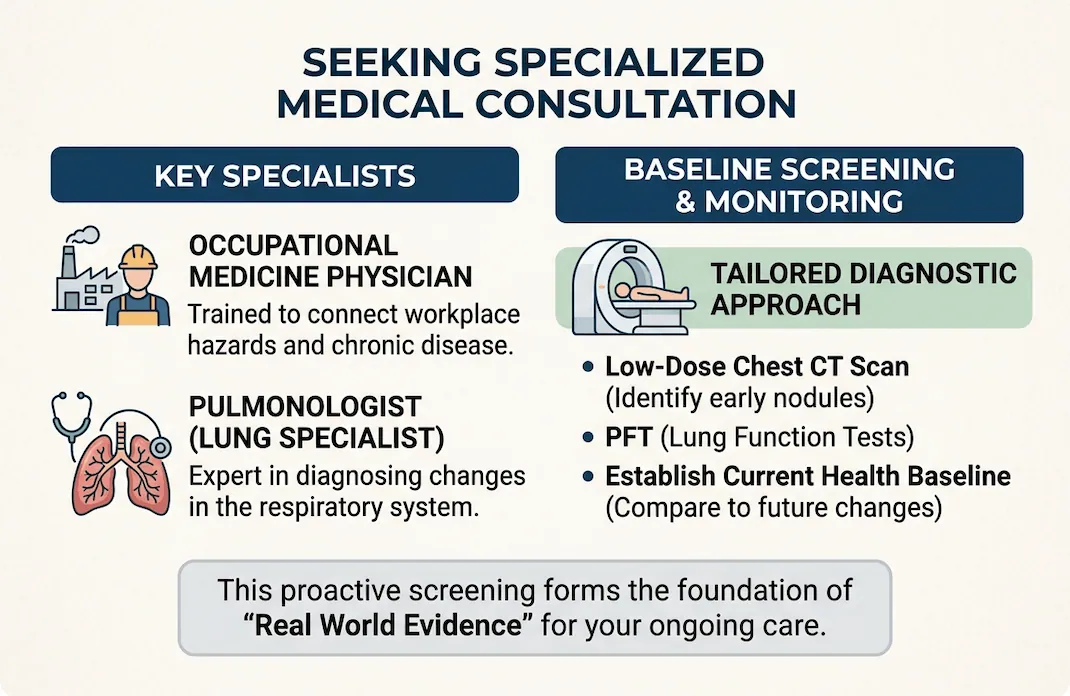
Once you have identified a history of exposure, scheduling a baseline medical exam is essential. Standard physicals may not always include the specific screenings necessary to detect early changes in the lungs or abdomen. It is important to speak with a physician who specializes in occupational medicine or pulmonology, as they are trained to recognize the subtle markers of asbestos related conditions. Informing your doctor of the specific nature of your exposure allows them to tailor their diagnostic approach, potentially using advanced imaging or lung function tests to establish a clear picture of your current respiratory health and overall wellness.
Early detection is the cornerstone of effective management. Regular monitoring can identify issues before symptoms become severe, allowing for a wider range of treatment options. According to the American Lung Association, the impact of asbestos on the body requires specialized attention from respiratory experts:
“Asbestos fibers are microscopic. When they are breathed in, they can get trapped in the lungs and stay there for a long time. Over time, these fibers can cause inflammation and scarring, which can affect breathing and lead to serious lung health problems.”
Communicating Exposure to Your Healthcare Provider
When you visit your doctor, be prepared to provide the documentation you gathered in the first step. Explain that you are seeking a baseline screening due to known asbestos contact. Ask specifically about the benefits of a low dose CT scan or a chest X ray. This proactive communication ensures that your medical file reflects the risk, which is vital for long term health tracking. Establishing this relationship early means your doctor becomes a partner in your family’s health journey, rather than a stranger you only see during an emergency. Consistent checkups allow for the tracking of “lung scarring” or “pleural thickening,” which are key indicators of past exposure impact.
Step 3: Mitigate Further Risk in Your Environment
If you suspect that asbestos is currently present in your home or workplace, the most important rule is to leave it alone. Asbestos is most dangerous when it is “friable,” meaning it can be crumbled or reduced to powder by hand pressure, releasing microscopic fibers into the breathing zone. Many older homes contain asbestos in floor tiles, attic insulation, or pipe wrapping. As long as these materials are in good condition and left undisturbed, they generally pose a low risk. However, the moment they are cut, sanded, or broken during a DIY project, they become a significant health hazard for everyone in the household, as the fibers remain suspended in the air for long periods.
To truly protect your family, hire a certified asbestos abatement professional to conduct a formal inspection. They have the specialized equipment and training to sample materials safely and determine if removal or encapsulation is necessary. Never attempt to remove asbestos containing materials yourself, as standard vacuum cleaners and masks are insufficient to stop microscopic fibers. Taking this professional step ensures that your home remains a safe haven rather than a source of ongoing risk. You can also research EPA guidelines for asbestos in the home to better understand the safety protocols required for older structures built before the late 1970s.
Step 4: Educate Your Family Members on Symptoms
While you do not want to cause unnecessary alarm, it is practical to ensure adult family members are aware of the symptoms associated with asbestos related illnesses. Knowledge is a form of protection. Symptoms often begin subtly and can be mistaken for common ailments like a persistent cold or the flu. By educating your family, you ensure that any changes in health are reported and investigated promptly rather than ignored. This collective vigilance creates a safety net for the entire household, ensuring that no one suffers in silence due to a lack of information.
Recognizing the Early Warning Signs
Key symptoms to watch for include a persistent dry cough, shortness of breath during physical activity, and unexplained chest or abdominal pain. Some individuals may also experience sudden weight loss or a feeling of “heaviness” in the chest. If these symptoms last for more than two weeks, they should be evaluated by a medical professional with your history of asbestos exposure in mind. Being vigilant about these signs allows your family to stay ahead of potential complications, ensuring that asbestos health risks are managed with the urgency they deserve. Remember that symptoms of mesothelioma can mimic other less serious conditions, making the history of exposure the key factor in getting an accurate diagnosis.
Step 5: Verify Eligibility for Financial Support and Trust Funds
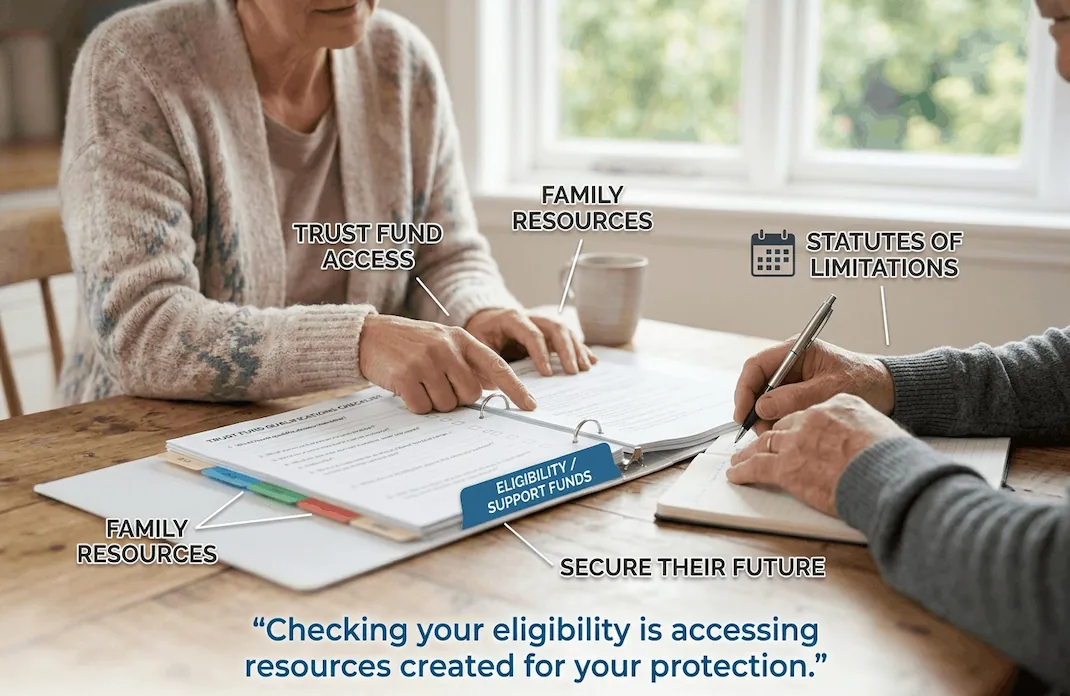
Many families are unaware that billions of dollars have been set aside in court ordered trust funds to assist those who have been exposed to asbestos. These funds were established by companies that manufactured asbestos products and are intended to cover medical monitoring, treatment costs, and family security. Checking your eligibility is not about filing a lawsuit; it is about accessing the resources that were specifically created to protect people in your exact situation. For many, this financial support provides the peace of mind needed to focus on health without the burden of mounting medical bills or lost wages. This capital was earmarked decades ago specifically for the protection of families like yours.
The process of verifying eligibility is straightforward and can often be started with a simple consultation. Because there are strict statutes of limitations on when these claims can be made, it is wise to investigate these options as soon as exposure is confirmed. Accessing these resources is a vital part of your role as a family advocate, ensuring that you have the financial “war chest” necessary to handle any future health challenges. To begin this process and explore the support available to you, reach out to MesoCare for guidance on the next steps for your family’s future and to secure the support your loved ones deserve.
Creating a Legacy of Health and Safety
Identifying asbestos exposure is a heavy realization, but it is also an opportunity to build a safer future through organized action and community support. By documenting the past, monitoring your health, and securing financial resources, you are taking the most practical steps possible to protect the people you love. You are not alone in this process. There is a vast network of medical professionals, support groups, and advocates ready to help you navigate the road ahead. Taking action today ensures that your family is prepared for whatever tomorrow may bring, turning a moment of fear into a legacy of proactive care and long term stability for everyone involved.
Asbestos Impact Fact:
It is estimated that over 30 billion dollars currently reside in asbestos trust funds established to provide compensation for those affected by exposure. These funds are accessible to individuals and families to help manage the long term health and financial impacts of asbestos. Source: U.S. Government Accountability Office
Medical Disclaimer: MesoCare.org provides educational information and is not a medical provider. We are not doctors. This content is not intended to be a substitute for professional medical advice, diagnosis, or treatment. Always seek the advice of your physician with any questions regarding a medical condition. Treatments mentioned are options that may help and should be discussed with a specialist.
Legal Disclaimer: MesoCare.org is a resource center and advocacy group, not a law firm. We do not provide legal advice or guarantee specific financial outcomes. No attorney-client relationship is formed by using this site or contacting an advocate. Potential compensation or grant amounts are estimates and vary by individual case.