

For many families facing a mesothelioma diagnosis, the initial treatment path seems clear: surgery, chemotherapy, radiation. These standard treatments are the first line of defense. But what happens when these frontline options are not enough? When the cancer continues to grow despite the best efforts of medical teams, a feeling of uncertainty can set in. You, as the caregiver, are looking for ‘The Next Step.’ You need more than just hope; you need concrete options.
In 2026, the medical landscape is evolving rapidly. Traditional treatments are being augmented, and often, the most promising advancements are found within mesothelioma clinical trials. While standard care focuses on established protocols, trials offer a proactive way to access cutting edge mesothelioma therapy, potentially including innovative immunotherapies and other targeted treatments. It is important to remember that participating in a trial is not about ‘being a guinea pig.’ It is about actively pursuing the newest, most advanced care options available for your loved one.
At MesoCare, we understand the questions and concerns swirling in your mind. Is a trial safe? What do the different phases mean? Can we afford the logistics? This guide is here to provide clarity and answer the critical questions that arise when considering this powerful treatment avenue.
You are not alone. Our team is here to help you navigate the paperwork so you can focus on healing.
What Exactly Are Mesothelioma Clinical Trials?

Clinical trials are carefully designed research studies involving volunteer patients. They are the essential link between scientific discovery and widely available medical treatments. Every standard mesothelioma therapy used today was, at some point, tested and refined through the rigorous process of a clinical trial. Their primary purpose is to determine if a new drug, device, or procedure is safe and effective for treating a specific condition.
For mesothelioma, trials are focused on discovering better ways to detect, diagnose, treat, and manage the disease. They offer participants access to new treatments before they are publicly available and provide a higher level of medical monitoring and personalized attention. These studies are conducted under strict ethical and scientific guidelines, prioritizing patient safety and well-being at every step.
Demystifying Clinical Trial Phases in Plain English
One of the biggest hurdles to understanding clinical trials is the medical jargon. You will constantly hear terms like “Phase II” or “Phase III.” For a caregiver, this can be confusing and intimidating. Here is a breakdown of the three main phases you might encounter when looking for a mesothelioma clinical trial for your family member, in straightforward language.
Phase II Mesothelioma Clinical Trials: Expanding Knowledge and Assessing Safety
Phase II trials involve a larger group of patients than earlier Phase I studies (which are primarily concerned with finding the safe dose). The main goal of a Phase II trial is to see if the treatment works for a specific type of cancer. For mesothelioma, this means determining if the new drug or approach slows tumor growth, improves quality of life, or extends survival for individuals with that diagnosis.
In this phase, researchers are also looking more closely at short term side effects and safety. Patients in Phase II trials receive the experimental treatment or a combination of treatments. It’s a crucial stage for gathering evidence that the new approach holds enough promise to warrant a much larger, more rigorous study.
Phase III Mesothelioma Clinical Trials: The Large Scale Comparison and Final Hurdle
Phase III trials are the final major step before a new treatment is considered for approval by regulatory bodies like the FDA. These large studies involve hundreds, or sometimes thousands, of patients across multiple cancer centers and hospitals, often internationally. Their goal is to compare the new treatment head to head with the current standard treatment.
Patients in a Phase III trial are often randomly assigned to two groups: one group receives the new treatment (the “experimental” arm), and the other receives the standard care (the “control” arm). This rigorous comparison allows researchers to definitively determine if the new treatment is better, as effective, or less toxic than what is currently available. Participating in a Phase III trial ensures you are receiving high quality care, either the best current standard or a highly promising new approach.
Accessing Innovative Mesothelioma Immunotherapy and Other Cutting Edge Therapy
The field of oncology is moving towards more targeted and effective treatments, and clinical trials are the front lines of this movement. In 2026, mesothelioma immunotherapy clinical trials are especially active, testing new ways to harness the body’s own immune system to fight cancer cells.
Immunotherapy Options and Advancements in 2026
Immunotherapy has already made significant strides in treating other cancers and is showing considerable promise for mesothelioma. Different types of immunotherapies are being tested, including immune checkpoint inhibitors (which help the immune system recognize cancer cells) and CAR T cell therapy (which reprogrammes T cells to attack the tumor). Participating in a trial gives patients early access to these innovative mesothelioma immunotherapies that are not yet part of standard care.
Targeted Treatment and Combination Therapy Approaches
Beyond immunotherapy, new treatments for mesothelioma are being explored through targeted therapies. These treatments use drugs or other substances to identify and attack specific cancer cells while minimizing damage to healthy cells. Trials also investigate complex combination therapy approaches, combining different immunotherapies or targeted agents with traditional chemotherapy or radiation, aiming for a synergistic effect that is more effective than any single treatment.
“Participating in clinical trials allows patients to access potential treatments before they are widely available and contributes to the body of medical knowledge, potentially benefiting future patients.”
— American Cancer Society
Is Participation Safe? Addressing “Being a Guinea Pig” Concerns
One of the most powerful and prevalent myths about clinical trials is that patients are simply “guinea pigs” – passive subjects used for experimentation without consideration for their health. This could not be further from the truth. The entire structure of modern clinical research is designed to prioritize patient safety and rights.
The Critical Role of Institutional Review Boards (IRBs)
Before any clinical trial can begin, it must be approved and is continually monitored by an Institutional Review Board (IRB). This independent committee, composed of physicians, statisticians, and community members, ensures that the trial is ethical, that the potential benefits outweigh the risks, and that the rights and welfare of participants are protected. The IRB has the power to stop a trial if they believe it is unsafe.
The Vital Process of Informed Consent and Understanding Risks
Every single participant must go through the process of informed consent. This is not just signing a paper; it is a conversation. The research team must explain the purpose of the trial, exactly what will happen, the potential risks and benefits, and any alternatives. This allows you and your family member to make a truly informed and deliberate choice. And you always retain the right to leave the trial at any time, for any reason, with no negative impact on your medical care.
Enhanced Monitoring and High Quality Care Throughout the Study
Patients in a mesothelioma clinical trial often receive more frequent and comprehensive medical checkups, imaging scans, and laboratory tests than patients receiving standard care. This extensive monitoring is required to track the effects of the treatment, good and bad, but it also means that any potential health issues are identified and addressed very quickly. In many ways, trial participants receive a higher level of personalized attention and proactive care.
How to Find Mesothelioma Clinical Trials that Offer Practical Support
As a caregiver, the first challenge is finding appropriate trials. The second, and often more overwhelming challenge, is the logistics and cost. The best new treatment in the world doesn’t help if you can’t get to it. In 2026, many forward thinking clinical trials and supportive organizations offer programs specifically designed to assist families with the logistical and financial burdens.
Financial and Logistical Assistance for Trial Participants
Recognizing that travel can be a barrier to participation, some clinical trials for mesothelioma with patient support offer travel stipends. These stipends can cover costs for gasoline, airfare, or train tickets. For studies requiring an extended stay away from home, housing assistance may be available, sometimes through dedicated patient lodging facilities or partnerships with nearby hotels.
Crucial Questions to Ask about Practical Support
When you are evaluating a potential trial, be sure to ask the research coordinator or patient advocate these crucial questions about assistance programs:
- Are there funds available to cover travel expenses?
- What is the process for receiving travel stipends?
- Is there assistance with finding or paying for temporary housing?
- Do they offer help with covering out of pocket costs for meals, parking, or local transportation?
- What other practical support services are available for families during the trial?
Consulting a Patient Advocate as Your Roadmap
A Patient Advocate at MesoCare can be your indispensable guide in this process. They have the knowledge and tools to help you search complex trial databases, narrow down options based on your family member’s specific medical situation, and most importantly, help you find clinical trials with patient support programs that can make participation a realistic possibility.
Planning for 2026 Deadlines and Ensuring Timely Participation
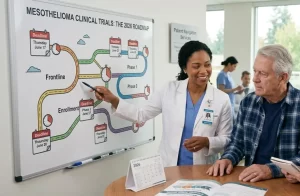
Timing is critical. Some trials have very specific windows for enrollment, perhaps right after diagnosis or immediately following a specific frontline treatment. Waiting too long to explore your options can mean missing a valuable window. It is never too early to start looking, even while your family member is receiving their initial treatment.
In 2026, the updated databases for clinical research make searching more efficient, but the numbers are still vast. Working with a dedicated advocate can ensure you are seeing the most relevant trials with the most robust support systems, ensuring your family can take this powerful “Next Step” with confidence and practical assistance.
A potential roadmap through this process can empower you as a caregiver. Exploring mesothelioma clinical trials for your family is a testament to your proactive care, ensuring every avenue of hope and advancement is considered on your journey towards better health and more time together.
For more information on navigating your diagnosis and finding the resources your family deserves, visit MesoCare.
Medical Disclaimer: MesoCare.org provides educational information and is not a medical provider. We are not doctors. This content is not intended to be a substitute for professional medical advice, diagnosis, or treatment. Always seek the advice of your physician with any questions regarding a medical condition. Treatments mentioned are options that may help and should be discussed with a specialist.
Legal Disclaimer: MesoCare.org is a resource center and advocacy group, not a law firm. We do not provide legal advice or guarantee specific financial outcomes. No attorney-client relationship is formed by using this site or contacting an advocate. Potential compensation or grant amounts are estimates and vary by individual case.