

For decades, workers in heavy manufacturing believed that the risks of their jobs stayed behind when they punched the clock at the end of the day. However, for those in the rubber, paint, and ceramics industries, a hidden danger often followed them home. Industrial talc, frequently used as an anti-sticking agent or a filler, was often contaminated with microscopic asbestos fibers. These fibers hitched a ride on coveralls, shirts, and trousers, turning the family laundry room into an unexpected zone of secondary exposure. This silent transfer of minerals has created a legacy of health challenges for families who never stepped foot inside a factory.
Understanding how these minerals enter the home is essential for families who may be experiencing unexplained respiratory symptoms today. If you are concerned about a history of “take-home” dust, learning about the different types of asbestos exposure is the first step toward securing your family’s health. At MesoCare, we act as your dedicated nurse navigators, helping you connect the dots between an old industrial job and current health concerns with empathy and clinical precision. By identifying these historical pathways, we can better advocate for the specialized care your family deserves in 2026.
Industrial Talc and the Rubber Industry Connection
In the rubber manufacturing process, talc was a staple. It was used to coat molds and prevent rubber sheets from sticking together during production. Because talc and asbestos are often mined from the same geological deposits, the “industrial grade” talc used in these factories was frequently contaminated. Workers would spend eight to twelve hours a day in a fine mist of this powder. By the time they headed home, their hair and clothing were often saturated with dust that appeared harmless but contained lethal crystalline structures. This powder was so pervasive that it often coated the interiors of workers’ personal vehicles as well.
When a worker arrived home and hugged their spouse or sat on the sofa, those fibers were released into the household air. This is a classic example of secondary exposure, which often affects the “Anxious Caregiver” or the children of the worker. The microscopic nature of asbestos means that even a small amount of dust on a shirt collar can be enough to cause significant damage over time. If you worked in these environments and are now worried about your loved ones, our team can help you identify specialized medical screenings tailored to those with environmental histories rather than direct trade backgrounds. Awareness is the first tool in our navigation toolkit.
Were you or a loved one exposed to industrial talc dust? You may be eligible for significant financial compensation and medical support.
How Ceramics and Paint Manufacturing Created Home Hazards
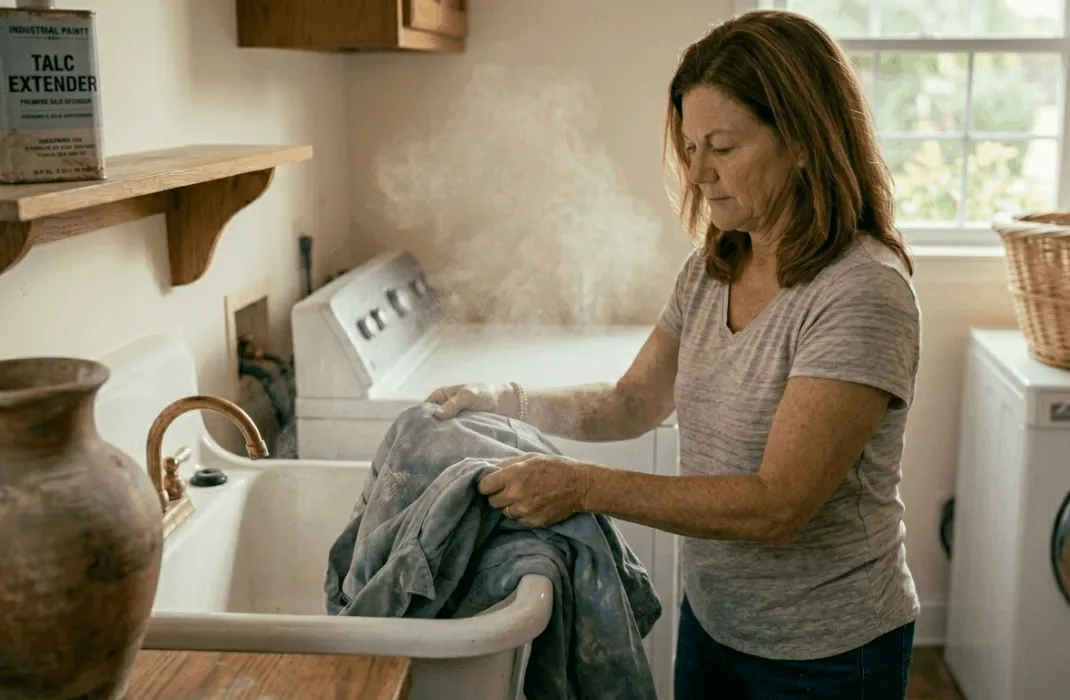
The ceramics and paint industries also relied heavily on talc for its unique chemical properties. In ceramics, it was used in glazes and clay bodies to prevent cracking during the firing process. In paint manufacturing, it served as an extender and a flattening agent. In both cases, the talc was handled in large, loose quantities, often in facilities with outdated ventilation systems. This created a high-volume “dusty” environment where asbestos fibers could easily attach to porous cotton work clothes and remain there until they were vigorously shaken or washed at home.
The danger of these industries is that the exposure was often invisible to the naked eye. Unlike the thick, gray dust of a construction site or an insulation project, talc dust is white, soft, and fine. It was easy for a worker to assume that a quick shake of their jacket or a blast of compressed air was enough to clean it. In reality, those actions only served to aerosolize the asbestos fibers within the home or garage. If you or a family member are struggling with a persistent cough or chest pain, finding a mesothelioma doctor who understands the specific pathology of talc-related asbestos is crucial for an accurate diagnosis. Standard oncology may not always catch the nuances of mineral-based pleural changes.
The Role of the Family Laundry Room in Secondary Exposure
The laundry room is often the most common site for secondary asbestos exposure. When the spouse of a rubber or paint worker handled the contaminated clothing, they were often the ones who inhaled the highest concentration of fibers. Shaking out the clothes before placing them in the wash released a concentrated “cloud” of dust into a small, often unventilated room. Over decades of performing this routine chore, the cumulative risk became just as high as if they had worked in the factory themselves. This “laundry room effect” is a well-documented pathway for mesothelioma in women who never worked in industry.
For many women diagnosed with mesothelioma today, the “invisible link” is the decades they spent caring for their husband’s work gear. This realization can be devastating, but it is important to know that help is available. There are specific grants for asbestos victims designed to help families cover the costs of travel for treatment, home health care services, and the specialized nutrition needed during recovery. These resources are meant to honor the dedication of the family unit and ensure that the cost of care does not become a secondary crisis.
“Secondary exposure, also known as ‘take-home’ exposure, occurs when workers unknowingly bring asbestos home on their clothing, skin, or hair. This puts family members at risk for developing asbestos-related diseases, including mesothelioma and asbestosis, often decades after the initial contact.”
Source: National Institute for Occupational Safety and Health (NIOSH)
Recognizing the Symptoms of Take-Home Asbestos Exposure
One of the most difficult aspects of secondary exposure is the long latency period. It can take 20 to 50 years for the asbestos fibers to cause enough cellular damage to manifest as a serious illness. Because the family member didn’t work in a “high-risk” trade like shipbuilding or mining, they often don’t think to tell their doctor about the industrial talc on their spouse’s clothes. This leads to frequent misdiagnosis, as symptoms are often mistaken for common issues like pneumonia, bronchitis, or basic heart failure. The key is to look at the household history as much as the personal medical history.
Key symptoms of pleural mesothelioma or peritoneal mesothelioma include:
- Persistent breathlessness even while performing light tasks
- Sharp pain in the chest wall or lower back that does not fade
- Unusual swelling or tenderness in the abdominal area
- Unexplained weight loss, night sweats, and general malaise
If you see these signs in a loved one who grew up in an industrial household, seeking an evaluation from an expert is the most proactive step you can take. You can also research lung health resources to better understand how these mineral fibers interact with the delicate lining of the chest and abdomen. Knowledge is the best defense against a delayed diagnosis.
Connecting Industrial Talc History to Modern Medical Care
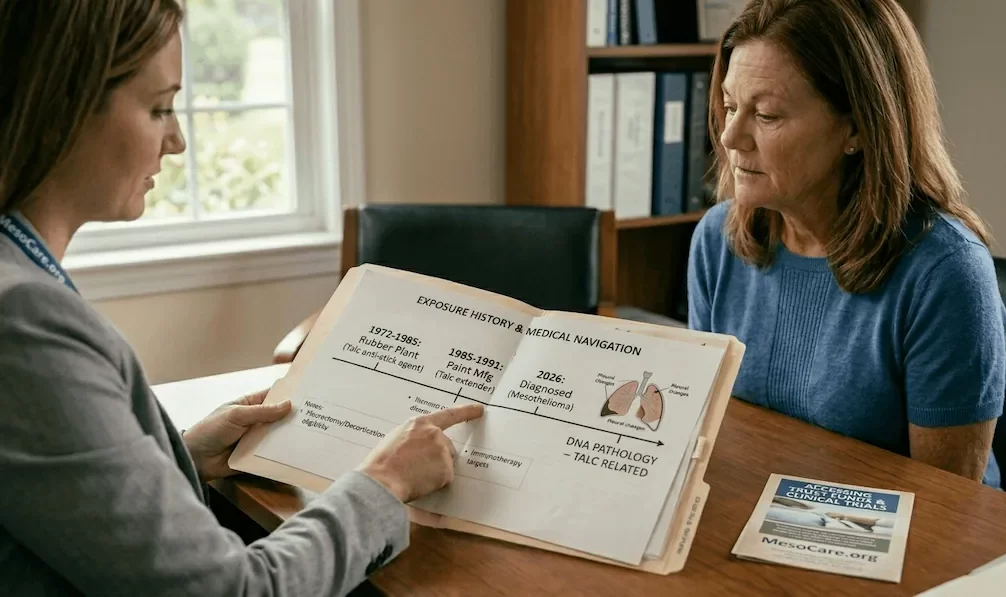
In 2026, medical science has advanced to include highly targeted treatments for those affected by talc-related asbestos. Immunotherapy and specialized surgical techniques like Pleurectomy/Decortication are offering patients more time and a better quality of life than ever before. However, accessing these treatments requires a clear “exposure history” that links the current illness to those old work clothes from the rubber or ceramics plant. Most clinical trials require a documented history of mineral exposure to qualify for participation.
As nurse navigators, we help you reconstruct this timeline. We look at the specific plants where your family members worked, the years of employment, and the brands of industrial talc they likely handled. This information is vital for your medical team and for accessing the asbestos trust funds that were established by companies that failed to protect their workers and their families. These funds serve as a vital safety net for families navigating the high costs of modern cancer care. To explore more about the scientific side of these minerals, the International Agency for Research on Cancer provides comprehensive data on mineral carcinogens and their long-term effects on human DNA.
Protecting the Legacy of Your Family
Many workers feel a sense of guilt when they realize they might have brought a toxin into their home. At MesoCare, we want to remind you that you didn’t know the risks at the time. You were working hard to provide for your family and give them a better life. You were fulfilling the American dream of hard work and dedication. The responsibility lies with the manufacturers who chose profit over safety. Taking action now is not about looking back with regret; it is about securing the financial and medical future of your family today. It is about holding the right parties accountable.
By identifying the “laundry room risk,” you can unlock resources that ensure your loved ones receive world-class care without the burden of medical debt. We are here to guide you through every step of this journey, from the first symptom to the final settlement. Your family’s health and dignity are our primary focus as we navigate the complexities of 2026 healthcare together. No family should have to face an industrial legacy alone.
To learn more about your rights and how to begin the process of advocacy, visit MesoCare or call us at 1-800-877-6000.
Critical Exposure Statistic: Research indicates that family members of workers in asbestos-prone industries, such as those using industrial talc, are at a significantly higher risk for mesothelioma, with some studies suggesting that secondary exposure accounts for up to 10% of all diagnosed mesothelioma cases.
Source: National Cancer Institute / Occupational Health Reports
Medical Disclaimer: MesoCare.org provides educational information and is not a medical provider. We are not doctors. This content is not intended to be a substitute for professional medical advice, diagnosis, or treatment. Always seek the advice of your physician with any questions regarding a medical condition. Treatments mentioned are options that may help and should be discussed with a specialist.
Legal Disclaimer: MesoCare.org is a resource center and advocacy group, not a law firm. We do not provide legal advice or guarantee specific financial outcomes. No attorney-client relationship is formed by using this site or contacting an advocate. Potential compensation or grant amounts are estimates and vary by individual case.